Saturday, April 30, 2022

Elden Ring's Land Squirts for Old School Roleplaying Games

(I actually started writing this post like a month ago but then I got busy n distracted, so I'm finishing it now and posting it!!! Oh, and I have a personal website now, so check that out!) 

So everyone has been talking about that Elden Ring game huh? It looks fantastic, amazing vibes, great open world, lots of opportunities for adventure, the whole nine yards, but uh, I actually can't play it. Woops! My computer wouldn't be able to run the dang thing, so I've been watching playthroughs of it to get a peek into that lovely little lands between that From Software gave to us. And while most people are talking about the bosses, how there's like a hundred of them, and I will admit Elden Ring's bosses do look fantastic, there is something else that has caught my attention...


THE LAND SQUIRT!!!!!!!

Yeah, maybe they're not the most important enemy encounter in the game, but I really love them. The land squirts are found along the shores of the starting area of the game, Limgrave, as well as in a few other watery areas. They gather in clusters and are basically immobile, their only real defense mechanism being releasing a cloud of poisonous liquid from ports on one side of their body. If they are themselves poisoned then they explode into a cloud of poisonous liquid that can poison the other squirts near them, triggering a chain reaction that can kill them all. And that's basically it; these aren't a very story important enemy, they aren't very active, they're basically just a hazard to deal with when traveling through swamps and coastal regions.

But what is so special about the land squirts is that this is the first time I have ever seen anything in any form of media that referenced the sea squirt, one of the most fascinatingly weird animals, and a group of animals that I love. 


Sea squirts, or more accurately ascidians, are a type of tunicate that live in relatively shallow seawater. Tunicates are super fascinating animals, both for their sessile, filter feeding lifestyle, and because they are actually chordates! Yeah, the lumpy, eyeless, boneless, multicolored creatures you see before you are closer relatives to you and me than an octopus or a beetle, despite the latter two sharing more superficially similar structures with us! Tunicates are the only invertebrate chordates, meaning that despite the presence of a notochord (the structure that forms the spine in vertebrates), they lack a bony spine or any bony skeleton at all. In fact, when they are adults, sea squirts and other tunicates even lack the very notochord that defines the phylum Chordata! They have a distinct nervous notochord in their larval form (seen below), but when they metamorphose into the adult stage of their lives they digest the notochord, leaving them without a central nervous system. Isn't that just so cool?? The closest boneless relatives of humans, frogs, lizards, birds, sharks, and fish DIGESTS its own nervous system to transition to adulthood. I just think that is sick as hell.

A larval sea squirt in all its flagellate glory!

Tunicates do this because they actually don't need a central nervous system as an adult. That's because sea squirts and other tunicates live lives where an energy-hungry brain would actually be somewhere between worthless and an actual detriment. To be precise, there are three types of life patterns that different species of sea squirts employ. On the one hand are the completely sessile solitary sea squirts that take root on the seafloor and filter out nutrients from the water; there is also a more socially organized form of sea squirt, where they are still sessile but form larger sea floor conglomerations, several squirts all rooting in more or less the same spot. And then, going in a completely different direction, are the much more mobile colonial sea squirts, considerably smaller than their sessile cousins, who form larger organism-esque colonies that can float and swim around the ocean, each individual squirt contributing to the whole. They're still filter feeders though, just ones that can move around. While I find colonial tunicates super cool and fascinating, the land squirts in Elden Ring are very obviously from the second type of sessile squirt, forming small communities rooted in close proximity to one another. Maybe a colonial tunicate monster would be a good opportunity for a post in the future?

A super cool free floating colonial tunicate... not relevant to today's post, but very cool nonetheless!

Additionally, sea squirts in real life are actually not uncommonly used as food! And I don't just mean by animals, though of course the sessile sea squirt is a perfect prey item for many predators who don't really want to bother chasing something around the ocean (and, as an aside, the presence of tunicates on land has fascinating implications for what eats them). But it is also human food in many parts of the world! In Korea and Japan, for instance, a species of sea squirt known as sea pineapple (Halocynthia roretzi) is actually cultivated in captivity and served raw, sashimi-style, or as part of bibimbap! Sea figs or grooved sea squirts (Microcosmus sabatieri) are eaten in France, Italy, and Greece, served raw with lemon or as part of salads! In Chile, the piure (Pyura chilensis) is served as an ingredient in seafood soups! There's more examples of sea squirt based cuisine around the world, but I just wanted to share these as inspiration for potentially more creative applications of squirt based creatures in your elf games!

A bunch of wild sea pineapples all rooted in place!

Before I get into the actual game stats, there is one question that has to be asked regarding the very existence of the land squirt. In real life, sea squirts are filter feeders, they subsist on the floating particulates of the ocean, with orifices open for water currents to just flow through, almost like a sponge. Elden Ring's land squirts are, rather obviously, on land, where last I checked there weren't any ocean currents carrying nutrient particles (maybe small grains of dust or floating seeds caught on the wind?), but they still have the distinctive openings characteristic of real sea squirts. I don't really know how they eat! They still live in wet environments, swamps and on shallow coastlines, so perhaps they have openings that are lower to the ground to pick up food from the water? The openings on the top are where they release poison in-game, so maybe those are waste openings? The poison is also a bit out of nowhere since, rather obviously, real life sea squirts don't spit poison out of their orifices, but I don't care!!! I like the weird lumpy poison shooting swamp dwelling giant invertebrate chordates!!!

The "land squirt ashes" that let you summon spectral squirts in Elden Ring

Land Squirt
Number Encountered: 2d6+1
Hit Dice: 3
Attacks: poisonous liquid (see below)
Armor: as leather
Morale: N/A (they can't flee!)
Cluster: Land squirts gather together in closely packed clusters.
Poisonous Liquid: Land squirts can spew a toxic liquid from their anterior openings. Those in the spray's range and on the front of the land squirt must save or take 1d8 damage.
Sessile: Land squirts are completely immobile, rooted in place by a fleshy stalk. They are reliant on water to survive.
Toxic Overload: Despite being poisonous themselves, if they are poisoned they explode and release all of their toxins in a wide radius. Those within the radius take 2d6 damage. If there are any other land squirts within range, they are also poisoned and thus also explode.

I thought about trying to model their poison ability off of the Dark Souls/Elden Ring poison mechanic, but I think that may have to wait for another day. Also, because I think larval sea squirts are so cool and weird, here's a stat block for a larval land squirt despite those not appearing in game.

Larval Land Squirt
Number Encountered: 3d6+1
Hit Dice: 1-1
Attacks: bite (1d4)
Armor: none
Morale: 6
Self Digest: Larval land squirts can begin to digest their stiff notochord and other inner organs, typically three days after they hatch. Touching a larval land squirt while it is self digesting deals 1d6 damage due to the creature's acid.
Slippery: Larval land squirts are incredibly difficult to grab, and they will always slip out of attempts to grapple them.

Perhaps I exaggerated the metamorphosis process... well it's whatever, hyperbolic monstrous presentations of real life animals is what fantasy games are all about!

Also, since I think land squirts would fit super well in a Gamma World or GW esque game, here are stats for them for use with 1e and 2e Gamma World. I can very easily see myself putting them in the Great Black Swamp of my Gamma Ohio or on the shores of Lake Erie!


Land Squirt for GW 1e
No. Appearing: 2d6+1
Armor Class: 8
Movement: N/A
Hit Dice: 6
These swamp and coastal creatures are the gargantuan mutated descendants of sea squirts, filter feeding sessile invertebrates. They are reliant on water to survive, but the openings once used for filtering water now spew noxious poison. The poisonous liquid of a land squirt is a contact poison with a poison strength of 9. If a land squirt is poisoned, they will explode and release a large cloud of poison, and they can be poisoned by the poison of another land squirt. Land squirts cluster together in large sessile groups.

Land Squirt for GW 2e
Number: 2d6+1
Morale: N/A
Hit Dice: 6d6
Armor: 8
Speed: Does not move
MS: 1d4          IN: 1d4
DX: 1d4          CH: 1d4
CN: 1d12+9    PS: 1d12+6
Attacks: Poison spray
Mutations: Poison Susceptibility, Water Dependency
Description: See GW 1e description above.

Sunday, March 27, 2022

Parrot-Fiends of House Manati (and the Unceasingly Useful Dermestid Box)

I mentioned these creatures in my last post, so I felt it was probably a good opportunity to write them up and describe more about them! 

Its hand twisted backwards, perhaps a hint to its provenance.

Parrot-Fiend
Number Encountered: 1d6
Hit Dice: 2+2
Attacks: claws/bite (1d6/1d6+1)
Armor: as leather
Morale: N/A
Avian Screech: Parrot-fiends are able to let out an ear piercing shriek. This shriek will always attract 1d4 additional parrot-fiends, as well as 1d6+1 city guards or house Manati stooges depending on the context. Typically, a parrot-fiend will only screech either when they have someone in their undying grasp, or when they are close to dying.
Magic Resistance: Parrot-fiends have +4 to saving throws versus spells and magical effects.
Moonlight Power: Parrot-fiends are weak and delirious on the night of the new moon, and emboldened on the night of the full moon. 
Undying Grasp: The parrot-fiend may sacrifice its claw attack to instead attempt to ensnare a single human sized enemy in its grasp. The target of its undying grasp must make a saving throw or be captured, and once captured only a successful open doors roll with assistance will be able to free them.
Undying Loyalty: When confronted with the dermestid box (see below), they have advantage on their fleeing roll (i.e. they roll twice and take the better result).

The dreadful parrot-fiends are the foul undead creations of the sorcerous scions of House Manati, the descendants of the Conquering King's princes stationed in Elburz Satrapy all those centuries ago. They are created in a secret ritual, passed down only through one particular matrilineal of the noble house, that which claims descent from the stargazer wife Vani, third wife of Manat son of the Two-Horned Conqueror. This ritual is done only on the night of the full moon, its eerie greenish light bathing the princely sorcerer in unnatural energies. Other than this, very little is known about the creation of the parrot-fiends, and in fact nobody knows where the parts which make them are sourced; it is obvious that the things are the merger of the desiccated body of a human being and the head of a great big crimson parrot, but who the bodies are from is the subject of rumors and nobody in this part of the world has ever seen a parrot of such a hue or size before. Gossip and whispers that the Vani-Manatis use the bodies of dead servants or of slaves or of long dead ancestors are just hearsay, and only in far eastern hinterlands can it even be dreamed that such a large and brilliant red parrot may roost.

House Manati employs parrot-fiends as a gruesome additional security in their palatial estates and, most notably, in the rich princely quarter of Tabur, the Bay of Red-Feathered Plenty. This is not to say that they rely solely on parrot-fiends, since they are slow, incapable of communication, and can only be produced once a month, not to mention their eerie uncanny countenance that puts even members of House Manati on edge. The parrot-fiends are more roving jailers and alarm systems than actual guards or mercenaries; they only capture intruders for humans on Manati or municipal pay to deal with rather than being a true defense themselves. In Tabur, in fact, the city guards despise the parrot-fiends and find that the undead creatures take a significant portion of their job, and perhaps even obstruct their sovereign operation in a full quarter of the city. But the interests of Manati and of the lesser notables of the city are great, and the wishes of those who are protected by the shuddering corpses win the day. The city guards would be very kind to anyone who could at all bring the parrot-fiends down a peg, even if it means angering House Manati. Outside of Tabur, parrot-fiends are a fixture of Manati estates, with the exception of those lesser scions and isolated valley dehqans who the heads of the house deem unworthy of receiving any fiends. These less notable princes would do anything to have a parrot-fiend in their possession; having even one is a status symbol of sorts within the circles of the house. 

An officer of the guard, drawn a tad too messily (also an akinakes short sword)

Tabur City Guard
As a level one fighter (HD 1+1, ATK 1, AC leather+shield, MRL 7)
Officer of the Guard: Large groups of guardsmen may be led by an officer of the guard, a high ranking guardsmen, second only to the city's captain. Officers of the guard fight as city guards with a +1 to hit and armor as chain+shield. When an officer of the guard is present, all guardsmen have morale 9. Officers of the guard are identifiable by the banner upon their back that looms over the streets, decorated with the symbol of Tabur, the ancient basilisk.
Equipment: City guards wield maces or akinakes (short swords). Those stationed at or near the city walls carry bows. Additionally, they always carry with them rope for tying up targets.

House Manati Stooge
As a level one fighter (HD 1+1, ATK 1, AC leather, MRL 6)
Mercenary: Most, but not all, men at arms in the employ of House Manati are mercenaries in some form or another. Their allegiance is to coin or to land, not to the noble house. 
Equipment: House Manati stooges wield hand knives, wooden bludgeons, hatchets, or slings. All stooges will have slings and one such melee weapon.


The Unceasingly Useful Dermestid Box!
Not everyone can be initiated into the beauteous cosmic mysteries that provide the ability to turn the undead, and yet standing skeletons and crawling corpses are a perennial, albeit not overwhelmingly common, hazard to travelers along abandoned roads or delvers into dark depths! The solution, then, is to find the one thing which can prompt disaster for the dead: decomposition. Enter the dermestid box, a wooden export of that ever industrious city Humakuyun on the Sea. This is a wooden container wherein lies a crawling mass of skin-devouring beetles; by simply opening the box and tossing its contents on a beskinned undead foe, it is possible that faint memories of self preservation will prevail and the thing will stagger back at the thought of its skin and flesh being eaten.

Dermestid Box.....20 drachmae
A single use item that, when thrown on an undead target that still has its skin (skeletons and the like are unaffected) prompts a d6 roll to see if they stagger back in sudden realization. There is a 3-in-6 chance of a reaction. Some undead which are made feverishly loyal through special sorceries, such as the parrot-fiend, have advantage on this roll.

Friday, March 18, 2022

Tabur, Grand Capital of Elburz Satrapy

Tabur has been the base of operations for my players in the King of Kings campaign (which has been on an extended hiatus since my last after action report post, unfortunately; though it will be making a valiant return soon enough), but for the most part it has been left rather vaguely sketched out. For the most part, it has only been a location to gather rumors and then return to after an expedition is done to give tribute to the group's patron, Farzaneh Taburi. While there has been tidbits of flavor here and there, I wanted to develop it into a more fully fledged location, and one that can possibly be a location for some adventure if the players so desire.

So without further ado here's some notes on the city, along with descriptions for the four quarters of the city and tables for random encounters! Additionally, I wanna thank John over at The Retired Adventurer for the advice/help with the format for the core description of the city.


Tabur
Capital of Elburz Satrapy, religious and political epicenter of the east.
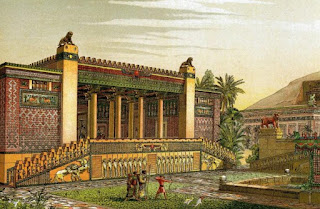
Atmosphere: Old money and old power, political intrigue, massive inequality. Looming stone structures a la Persepolis.
Size: ~9k souls.
Demographics: Mostly Shahanistani, small frogling and weirdwalker minorities.
Ruler: Satrap Gholam Ruyanian
Major Cults: Cult of the Morning Star (sanctioned), Cult of Mitra (sanctioned), Cult of the North Star (sanctioned), Followers of the Veiled One (banned)
Major Factions: House Taburi, House Manati, The Temple Reformers, The Snakes, The Mongeese, The City Guards
Landmarks: Hangman Bridge (river crossing, public executions), Lion Bazaar (major market), The Plaza of the Horse (horse racing and gambling), The Iron Pit (prison and city guards).
Quarters: The Tigerskin Quarter (froglings, weirdwalkers, and industry), The Charcoal Quarter (the poor, destitute, and craftsmen), The Bay of Red-Feathered Plenty (noble shops and homes of House Manati), the Emerald Eye of the Basilisk (fighting rings, homes of House Taburi).

What one of the gates to the city might look like (the Ark of Bukhara in Uzbekistan)

Short Descriptions of Factions
House Taburi is a well established noble family centered on the city of Tabur, but with land holdings and dehqans of many ages spread primarily throughout Elburz satrapy. It is the family of Farzaneh Taburi, the group patron, and thus House Taburi is the faction that the players are most associated with.
House Manati is the greatest rival of the Taburis, although they are a younger house. While Taburi can draw their lineage back to some of the earliest shahs of Elburz, Manati claims descent from the Conquering King. The jockeying for power between Manati and Taburi is why the Shahanshah has appointed a third party as satrap of the province.
The temple reformers are a loose collection of priests and temple bureaucrats who believe that the enlightened temples have been taking advantage of the poor and needy and seek to reform the religion and, by extension, the state of affairs to better society. Many of them are followers of the Veiled One.
The Snakes and the Mongeese are the rival horse racing teams of Tabur, with followings in most of the cities of the north of the Enlightened Empire. Think something comparable to the Blues and Greens of Justinian's Constantinople, along with their gangs of supporters.
The City Guards are the clenched fist of Satrap Ruyanian, although they are mostly centered on the edges of the city and at the Iron Pit where criminals and heretics are held and executed.


The Tigerskin Quarter
Sights: Closely packed brick houses, tight winding streets, frog lords in water tubs carried on the backs of slaves.
Sounds: Conversations in several different languages, braying of beasts, croaking of frogs, clanging of metal on metal.
Smells: Burning smoke in the air, brackish blackened water, wet clay, hot metal.

The Steel Serpent:
The official supplier of metal arms and armors for both the city guards and the forces of the Kanarang whenever he comes to Tabur. The only official source of plate armor and other such items in the city, and to even be able to purchase such items requires bribes and cajoling.
Mail Armor: 150 drachmae
Cataphract Armor: 500 drachmae
Grivpanvar Armor: 1,000 drachmae
Cataphract Horse Armor: 1,000 drachmae
Grivpanvar Horse Armor: 1,500 drachmae
Repairs to any set of armor: Half the listed price i.e. 250 for repairing cataphract armor, 500 for repairing grivpanvar armor.
Short Sword: (such as akinakes) 12 drachmae
Two Handed Sword: 25 drachmae
The Steel Serpent is the only place where one is able to legally acquire a sword in Tabur and, as mentioned above, access is controlled.
Etc.

The Tigerskin Quarter is home to Tabur’s two minority communities: the froglings, sorcery-wielding amphibians from the marshy land surrounding the First City in the western regions of the Enlightened Empire, and the weirdwalkers, an exiled people with no land who are on a journey in search of their lost god (Kusa’s people!). The froglings cheer for the Mongeese.

Potter's Alley:
This is the place to go if you need any kind of ceramic ware or glass (it has been since days long gone that glassblowers were lumped together with potters), and so it is frequented by anyone in need of a container for anything else. Potter's Alley is also on the edge of the neighborhood of the weirdwalkers, their mysterious kilns belching sweet smelling smoke up into the sky.
For a typical clay vessel, price varies by who is making it and by size. Typical size to price ratios are:
Very Small: can fit roughly one swig of a liquid or a small amount of solid, 2 drachmae
Small: a small bowl or oil lamp size, 3 drachmae
Medium: comparable to a water bottle or larger bowl, 5 drachmae
Large: an amphora of wine or something of comparable size, 9 drachmae
Very Large: a very large bowl too large to hold in one hand or even both hands, 15 drachmae
For glass vessels, add 5, so very small becomes 7 drachmae, small 8, medium 10, large 19, very large 25.
It is possible to commission weirdwalkers to make ceramics with mysterious properties, for that is the gift of their crawling god. Such creations have their prices determined on a case by case basis.

Random Encounters in the Tigerskin Quarter (1d6):
1: A contingent of burly sooty slaves dragging a hot crucible through the winding streets, holding onto it with heat-resistant gloves and tongs and dragging it on dirty clothes. They are singing working songs and swearing up a storm.
2: A panicked debtor is attempting to pawn off subpar blades that they say they were convinced to sell by a frogling blacksmith. If they don’t get money for the blades, they’ll be sent to the Iron Pit!
3: A frogling mother has accidentally dropped the clay jar she was using to carry around her tadpoles!
4: A group of weirdwalker children playing in the street with clay toys of different animals and monsters. If you didn't know better, you'd think some of them were moving on their own!
5: A hunched over manservant dragging a cart behind him is in the process of picking up and taking back swords and other weapons for the city guards. He is dissatisfied but afraid of punishment.
6: A frogling coin lord is being marched through the street in a tub of sloshing water borne on the backs of four slaves. They are going around the streets in some fusion of a business trip and a flaunting of wealth.


The Charcoal Quarter
Sights: Tenements housing many more families than can comfortably fit all stacked one upon the other, crumbling ruins as the quarter gets closer to the city walls, beggars and carpenters and dye workers.
Sounds: Plaintive groans, feet padding upon the wet ground, arguments in some house you can't quite see.
Smells: Water, sweat, smoke from wood fires to make charcoal.

The Charcoal Quarter is where most people in Tabur live. It is presumably where most of the players have been staying when not going on adventures for Farzaneh Taburi, at least just due to it being the cheapest place to live. It is also a good source of rumors, namely from everyday lower class inhabitants of the city; most of the rumors that the players have received have come from NPCs centered in the Charcoal Quarter.

In addition to being the population center of the city and the poorest section of the city, the Charcoal Quarter is also where most craftsmen are centered. While those who work in industries that require a more forceful and fiery hand, such as blacksmiths and glassblowers, dwell in the Tigerskin Quarter, simple carpenters, bakers, coopers, dyers, candlemakers, and others in similar professions work here. Probably the biggest landmark of the quarter is the great dye works, where swarms of barefooted young women and men with bright stains up to their knees provide color to the spun cloth of the town.

Notably also, the Charcoal Quarter is where one can find most hirelings on the cheap. Drachm Street, where beggars and those in need of odd job employment aggregate, is where many such people can be found.
Example hirelings of Drachm Street:
Beggar: 1 drachm, +1 hit point
Light Bearer Boy: 1 drachm
Failed Stonemason: 3 drachmae, skilled at digging and cutting stone
Dye Works Girl: 3 drachmae, agile and quick, able to identify liquids
Tough Bully: 4 drachmae, +1 to hit and damage
etc.

Random Encounters in the Charcoal Quarter (1d6):
1: A millenarian street preacher, clad in garishly colored robes and with some implement of pain wrapped around their necks and arms. They call for all who listen to heed their warning of the coming prophet. If they linger too long, they will be arrested by the city guards.
2: An elderly beggar, a veteran of a battle against the Gnostic Elves decades upon decades ago, holding out a bowl for alms as he sits on the corner, unable to move except on a little wooden cart made for him.
3: The loud sound of an energetic youth harking goods outside of a family shop. They are making these little pieces of carpentry sound irresistible. 
4: A scrap in the street! 2d4 youths (and perhaps their tired and haggard parents) are caught in a fist fight over some perceived or real slight. The only way to find out is to intervene.
5: A gaggle of dye girls striding through the murky street, their legs and arms stained a cacophony of colors. They seem very excited to go see something.
6: A giant insect, pitch black from the choking smoke, crawls on the wall beside the group. It can spray a noxious fluid from its behind, and tastes foul raw but delicious when boiled (though make sure to throw away the water after, it'll be choked with coal dust)


The Bay of Red-Feathered Plenty
Sights: Houses made of beautiful wood and smooth stone nicely spaced from one another, bright red feathered plumes that loom over the street, servants in well to do garb anxiously going from store to store.
Sounds: Jovial conversation filled with words that you only half understand, deep guttural laughter, discussions over prices, water and wine being poured from clay jugs.
Smells: Spices, wine, olive oil, and aromatic woods. The dried out skin of long dead animals and dusty feathers.

The heart of upper class artisans and craftsmen, who work in fineries and fripperies day in and day out. Just about the only place here in the east where the traditional luxuries can be easily bought and sold (other than, of course, Humakuyun on the sea, but that city has many more unorthodox luxuries as well). The ancient arts and poetries of the region are represented well in this district. Additionally, the Bay of Red-Feathered Plenty is the center for House Manati, whose scions and princes dot the rolling riverside hills of the district in spades. It is beside the river itself where the most ancient building in the quarter sits, the palatial estate of the Conquering King's bastard son's descendants, the heads of House Manati. While House Manati presides here, they cannot stop the nobles of House Taburi from venturing in; but the Manatis have made as much of an effort as possible to keep their district as autonomous as possible from the sway of the city guards.

While it is technically not illegal to set foot in the bay as a member of the lower classes, being visibly poor will result in disgusted glances and refusal of service. If you dress in clothes befitting a higher station than your own, then perhaps you can get by in the wide boulevards of the bay, but being found out as a facsimile of the rich will net you an even worse punishment than simply being poor in the district. Alternatively, you can simply spend Rapport with your patron to have her accompany you in the bay, resulting in everyone assuming you are simply one of her clients or slaves.

The bay gets its name from the red feather plumes that loom over it during the day, and from the crimson Parrot-Fiends who haunt it at night, squawking loudly and entrapping trespassers in an unbreakable embrace until guards arrive (although in certain situations this is actually until pigmen in the service of one of the noble scions of House Manati arrive; in fact, the bay has a sort of parallel system of pigmen guards for affairs internal to House Manati). The parrot-fiends are sorcerous undead creations, and can be turned by clerics. The city guards hate them.


Example stores in the Bay of Red-Feathered Plenty:
The Aviary of Ashfar Ghen - Large building filled with cages of the finest and most exotic birds. Exorbitant fees must be paid for long distance transportation without the birds eaten by tigers. 
The Herpetorium of Yamsheen the Wise - An unassuming building operated by an old woman from a long line of fine lizard breeders. Illegal gecko production facility in basement, shipments sent to the assassins in Humakuyun.
The Manticore’s Tongue - A warehouse of spices, owner on good terms with Farzaneh Taburi. Locked up tight at night for fear of robbery, even with the bay’s security system.
The Silver Scale - A rather new lizard breeding enterprise established by a brineman named Farfeen. Closely involved in parrot-ghoul maintenance.
Sarai’s Silken Thigh - A purveyor of fine clothes, which supplies the city’s nobility with fine silken brocades and dyed cloth. Sarai owns a dying facility in the Charcoal Quarter.
Order of the Red Feather Dancers - A dancing company that takes in young men and women and turns them into dancers and confidants. Also sells spy-monkeys.
The Glinting Knife - A secret weapon supply for the nobility and merchants. Specializes in the production of blades for quick and silent murder. 
Yaghbona’s Furs and Skins - A purveyor of fine clothes, but more particularly focused on items made of animal furs and reptilian scales. One of the few shops in the bay regularly visited by adventurers.

Random Encounters in the Bay of Red-Feathered Plenty (1d6):
1: A foppish young nobleman being borne along on a palanquin, sightseeing around the quarter that he already lives in. He is loose with his coin, and easy to fool.
2: A poor river fisher on their boat, being yelled at by a port servant in dark robes for stopping in the bay's wharf.
3: A mysterious palanquin with its curtains drawn in close, only vague silhouettes visible through the thick brocades in the midday sun. Rumors abound as to what is in it; a portion of a noble's harem, a fine treasure being transported from house to house, perhaps even an eccentric noble themself?
4: An artist displaying lizard poetry in the street. The beautiful words encoded in the patterns of scales on the reptiles' backs are mesmerizing.
5: A group of burly men in full body cloaks and masks march through the street, carrying bags laden with fineries upon their backs.
6: A wandering, meandering party of nobles and their hangers-on crawl through the street, wine drunk and with full stomachs.


The Emerald Eye of the Basilisk
Sights: Houses of ancient stone hewn with the finest of tools, tall buildings painted in bright hues of green, mercenaries and guardsmen for hire lingering on certain corners, members of house Taburi striding in the street with parasols held above them by manservants.
Sounds: Whispered conversations at street corners, the wind flowing through silken curtains, the muffled sound of fighting somewhere not too far away and not too close.
Smells: Incense, soap, blood. The fresh smells of the river as it flows into the city.

The Emerald Eye is the old center of the city, the part of town that has been inhabited for centuries before even the time of the Conquering King. The crumbled remains of the city's original stone walls encircle this district, as the city has grown far past its meager beginnings innumerable generations ago. At the middle of the Emerald Eye is a hill, where in ancient days it was said a basilisk was born on the night of a viridian comet and a full moon. That baleful rumor kept the pastoralists of the valley away from the hill and away from the river it sits beside, allowing for a settlement to take root. Sitting atop the hill is the palatial abode of the city's satrap, Gholam Ruyanian; at its foot is the Iron Pit, the dreadful jail where criminals and heretics go to die. Encircling the satrap's palace are the homes of House Taburi, the ancient family who founded this city.

While House Taburi are the ancient founders of the city, they are also deeply involved in the trade networks that pass through the valley, and in many of the affairs that this implies. The Taburis have a finger in every pot, so to speak; Farzaneh, for instance, is deeply involved in the salt and spice trade through the Great Desert to the south. As a result, there are many warehouses owned by House Taburi in this part of town. One of the more unsavory businesses which House Taburi have gotten themselves involved in is the mercenary trade. While there are independent mercenary companies in Elburz satrapy, House Taburi dominates this area in Tabur proper. This, however, was made difficult by the ban on open carrying of weapons in the city put in place in the not too distant past. As a result, there are those in House Tabur who operate secret fighting arenas and underground training facilities, trying to stay under the nose of the city guards, or bribing them every once in a while.

Example mercenaries and hirelings of the Emerald Eye district:
Great Desert Slingman: 7 drachmae, wields a sling
Desert Guide: 9 drachmae
Dog Headed Mercenary: 6 drachmae as long as you let him eat what he kills, wields a nasty weapon
Spearman: 8 drachmae, wields a spear
Caravan Guard: 7 drachmae
Amazon Guide: 12 drachmae, wields bow at +1
Wrestler: 10 drachmae, skilled martial artist and can perform feats of strength, carries a training club
etc.

Random Encounters in the Emerald Eye of the Basilisk (1d6):
1: A gaggle of temple bureaucrats and palace scribes striding through the street, deep in conversation about taxes and financial minutiae. Their pockets are weighed down.
2: A wrestler in traditional garb practicing in the street with large weighted clubs. His brow glistens with sweat and his hairy chest heaves up and down.
3: A lithe hunting dog on the loose, its leash still clinging to its neck. This is obviously the pet of some nobleman, but the thing will resist capture.
4: A meeting of functionaries for some business of House Tabur's, discussing prices and trade routes and hazards along the way. Maybe they'd be open to an offer of help?
5: A group of mercenaries attempting to advertise their skills and prowess without direct reference. Spearmen wielding errant branches, wannabe cataphracts on donkeys. They know a guard is nearby.
6: A young member of house Tabur striding through the street in ostentatious dress and style, their long cloak held up off the ground by two manservants behind. An older woman, presumably the noble scion's mother, stands at a distance, disapprovingly.


That's all I wanna share about the city for now! Obviously there are more opportunities for tables or descriptions of NPCs or things to do with the landmarks I mention at the top of the page, but this post is long enough as it is so that will be for a different time.

Tuesday, March 8, 2022

Goin' Through the Fiend Folio Part 10 (Jaculi to Kuo-Toa)

 Hey there! It has been both quite a bit of time since my last post, and an even longer time since the last Fiend Folio review post! I felt that it was of the utmost necessity to rectify both of these issues! Today, we'll be covering the letters J and K in the good ol' Folio!


Jaculi
★★
The jaculi (which the description is clear to point out that the term is both singular and plural) is just Okay. I don't really have strong feelings about the jaculi. They're arboreal serpents with a ridge of razor-sharp bone on their heads that can launch themselves from trees with surprising force. That's actually really cool! It just kinda feels like the execution is a tad lacking, and for some reason these guys are specified as being encountered in swarms. I'm all for swarms, but I don't think this is a creature that I would like to use as a swarm. And in a lot of ways, its because this is a real mythical creature! The jaculus is a creature from medieval European bestiaries (although it also appears in an Old Norse romance), where it is also known as a javelin-snake. When you get down to it, all that the mythical jaculus does is the whole launching from trees at dangerous speeds thing, but for some reason I just vastly prefer the Pliny the Elder style presentation of "well there's just these weird snakes that live in this place!" rather than the overt AD&D naturalisms.

Check out this medieval depiction! Still described as a snake, but with wings and feet!

Oh also, the Fiend Folio jaculi is said to also live in "pillared halls" in addition to trees, presumably so it makes sense to put it in dungeons. I think it makes sense for animals to adapt to new environments, plenty of interesting invasive species in real life and all, but also this is a COWARD MOVE. Just put a forest in your dungeon coward, do it.


Jermlaine
★★
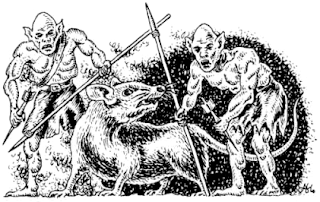
This is one of those creatures that really, really, really doesn't need a full page of text. I honestly never like it when AD&D monsters have such extensive descriptions; I can understand it for monster categories with lots of subtypes like dragons, but when it's just another race of humanoids where most of what is written is what you would expect given the barest context for what the monster is, it is just so completely unnecessary. Jermlaine are gross little humanoids that live among rats, lay traps for players, act in a generally sadistic manner, and have weird baggy skin and conical heads that make them look like they're wearing leather armor. I actually really like that strange uncanny description, but god they did not need a full page of text. Much of it is absolutely unnecessary descriptions of what specific traps they set and how they will treat characters in different armor different and how they cut belts and straps off of characters if they stop near where they are positioned, etc etc. Also they have a special leader at higher numbers, which is something I actually like about old school humanoids, but this "very old and exceptionally evil one" can just drain the magic out of items. Their leader is just a disenchanter but without the cool look! As a side note, I actually do love how many different names these things have, it feels like a very natural little tidbit; they are known as jermlaine, jinxkin, and my personal favorite, the BANE-MIDGES. The thing is though, a nice detail in their name and an uncanny detail about their appearance does not a great monster make, and the illustrations are Really Not Good. Yeah, that's illustrations plural, they felt the need to include two drawings of these just okay to boring gremlins. I like weird sadistic torture guys that live underground, but I would much sooner just use a well established D&D monster like kobolds or some kind of fairy, or I'd use a literary reference like Lovecraft's Brown Jenkin or Richard Sharpe Shaver's Dero.


Kamadan
★★★★
A nice, simple, distinctive monster! Visually, the kamadan is just fantastic, feeling delightfully mythical and chimeric. It is simply a leopard with a neck ringed by a mane of non-venomous snakes, with its only additional weird power being a sleep-causing breath weapon. That's honestly effective! I would always consider using the kamadan in my games, especially in suitable environs, and I know I'm not alone: my friend the Cosmic Orrery wrote up an adaptation of the kamadan for FKR games! The leopard isn't really a big cat that would be likely to appear in King of Kings, but a reskin that just changes it to a different feline is very easy to do. Oh yeah, there's also a note in the description that the kamadan is "clearly a relative of the displacer beast" which... is it really? The only connection is that both are feline monsters that feature some kind of tentacular limb. The description even says that "how it became such a curious cross-mutation is a matter for speculation". Perhaps, just going out on a limb here, the kamadan was never actually intended to have any connection to the displacer beast and the connection was forced in there by Gary when he gave the creatures his own edits. As far as I can tell, despite its mythical vibe, the kamadan has no connection to any previous inspiration, whether from myth or literature. This is one of the great inventions of the 1970s free-wheeling mashup culture!

Like I mention below, this is from Holly Black's and Tony DiTerlizzi's Spiderwick Chronicles. I just think it's a good depiction of the kelpie.

Kelpie
★★
I assume most folks reading this will be at least somewhat familiar with the kelpie, since they are one of the more well known Celtic folkloric monsters. In the folklore, the kelpie is a deadly water-dwelling horse; as an aside, one of my favorite ever illustrations of a kelpie is Tony DiTerlizzi's drawing for the Spiderwick Chronicles (which is totally on topic, since DiTerlizzi was an illustrator for AD&D second edition!). The kelpie as presented here, however, is completely divorced from its faerie origins, instead being a form of intelligent plant life that dwells underwater and can shapeshift. The Folio kelpie's default form is actually that of a human woman, with the more folklorically accurate horse form mentioned only offhandedly. Kelpies do the classic water-monster thing of trying to trick people into the water only for the kelpie to grab them and drag them to a drowned death beneath the surface. Their shapeshifting is part of the temptation here, but they are also able to cast a charm spell once per day. Personally, I think the charm spell kinda defeats the purpose of the tempt to go underwater thing, since it takes away agency from the player, but it's whatever. Additionally, it is specified that the charm spell only works on men, with women being completely immune. I understand the impulse here, since this kind of effect is well attested in myth and literature, but I gotta say I don't love the gender segregated effects. It feels like it is founded in a sexist idea of how men vs women engage with things around them; however, I will say that the given justifications for the kelpie's power over men are actually very fun. The description provides two possible explanations, either that the god of the sea made kelpies to punish men who sailed the seas without paying him their respect, or that Olhydra, the elemental princess of evil water, created kelpies and made it only effect men because she is a feminine being. I still would prefer just to not have gender segregated effects, but the explanations are fun and mythic-feeling at least! Additionally, it is mentioned that they can walk on land for a few hours and they can save against fire attacks only ever taking a maximum of half damage due to their "slimy wetness". Just felt that it would be valuable to include that for completeness's sake.


Kenku
★★★★
A very interesting and fun humanoid race, and one that really doesn't feel like anything else! This isn't the first bird-person featured in the Folio, but in my opinion the kenku is leagues more interesting and evocative than the aarakocra. The latter are just bird people, while the kenku are eagle-headed thief-magicians that act like folkloric tricksters a la faeries or tengu. I find it interesting that the Folio kenku has the head of an eagle; in more recent editions, they have more often been depicted with a corvid head and black feathers. I obviously love crows and ravens, but the eagle head feels nicely incongruous for a race of tricksters that one may meet in a dungeon; corvids are just trickster birds in real life! Since I mentioned the tengu, it seems pretty apparent that the Folio kenku is inspired by the Japanese tengu, with the pseudo-Japanese name and the fact that they wield stereotypically East Asian weapons (quarterstaff, samurai swords). The magical powers of kenku of higher HD feel evocative of some of the powers of mythical tengu as well, although mixed in with more typically gygaxian fare. I know I complained in the jermlaine entry that I didn't like unnecessary detail in a humanoid entry, but I actually quite like the succession of magical powers that kenku have as they reach higher HD numbers. It makes them feel almost like a B/X style race-class, with them gaining each power at respective levels. Their more unique abilities are very evocative: namely the fact that they can disguise themselves as humans (not shapeshifting, but rather disguise!), which seems almost impossible (how on earth does a feathered bird head turn into a passable human face?) but the description mentions that their beaks always make distinctive noses; in addition, there is a mention of how kenku favor kidnapping as a source of money, and will sometimes give away treasure freely only for the coins to turn to dust the next day. That is just so delightfully folkloric! They also speak exclusively telepathically, which has fascinating implications. I just really like the kenku!


Khargra
★★
A delightfully strange earth elemental creature that appears as a metallic organic cylinder with fins, swimming through the earth in search of metals. Between things like this and the xorn and rust monster existing, I'm honestly surprised that there is any metal left at all in the implied world of AD&D! I think the khargra has a bit of that AD&D description bloat problem, taking up roughly half a page of description that I personally think could mostly be gleaned from "a creature that swims through earth as if it were water and eats metals"; like, for instance, I don't really think it needs a whole paragraph to say that the khargra can leap from the earth it is moving through. I kinda like the mentions of spells that can stop them in their track, though again a lot of it is just stuff that makes sense (like heat metal hurting it); I'm interested by the fact that the phase door spell kills it instantly if it is in the middle of phasing back into the earth. I'm gonna be completely honest though, this would be a three point monster if it weren't for the illustration. I really quite like the weird monstrous gaping mouth and tiny claws on the drawing. Personally, my go-to metal-eater will always be the darling little rust monster, but these burrowers are alright!

Killmoulis
★★
A fascinatingly weird little creature, with, once again, a very folkloric vibe. The description explicitly compares them to brownies, since both the killmoulis and brownies come out at night to help around the house or, in the case of the killmoulis, around the granary/factory. What is much more... unfortunate about the killmoulis is that while they are doing work for you at night, they will also eat anything and everything around to eat (namely grains) and will kill any dogs or cats that may be around. I feel like someone waking up in the morning will be more concerned about finding their dog poisoned or their cat "snared or killed with long pins" (both of which are explicitly described as the killing methods of the killmoulis for dogs and cats respectively) or finding all of their food gone than they will be about the chores getting done. Honestly, this is a very perplexing creature, and not one that I think is fitting for dungeon exploration or for wilderness encounters; rather, it seems to me like the killmoulis is a prompt for an adventure, with the owner of a granary or somesuch confused as to why food is disappearing at night or why their cat was killed. I don't think I would use the killmoulis, but they're kinda interesting at least.

Check out that pincer staff in action!

Kuo-Toa
★★★★
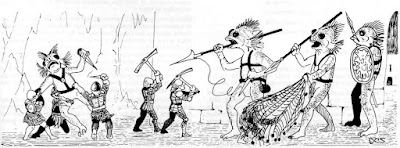
Okay I know what you're thinking. I hated how the jermlaine took up a full page of text, even gave them a poor score because of that, but the kuo-toa which has even More text gets a full five out of five stars? Yeah, well you see, it is simply because I am biased. I just like weird fish people more than sadistic mice people. Though I do think it is a Bit more than just simple bias. While I definitely do think the kuo-toa description is unnecessarily wordy and long (which is very typical of the creatures that Gygax himself contributed to the Fiend Folio), it feels more like it has earned that length in a way that the jermlaine (which, as an aside, are also a Gygax addition) do not. Rather than simply being things which one could extrapolate easily from a very basic description, the description for the kuo-toa primarily features a relatively detailed description of kuo-toa society which goes even further than the typical composition of force descriptions that most old school humanoids received. In addition to telling the prospective DM how many fighters and clerics would be present in a given group of kuo-toa, it also describes in relatively evocative sword and sorcery prose the backstory of the kuo-toa, their reproductive habits, and elements of their social structure. These things make a lot of sense given the context that the kuo-toa originate from, i.e. the Drow series of modules which features a fully realized underground settlement of kuo-toa. Kuo-toa society is highly stratified and theocratic, with the leaders of groups of kuo-toa always being clerics or dual classed cleric/assassins (which is an absolutely fascinating combination, as an aside). They keep slaves and have specified roles for "whips" that maintain morale, "eyes" which report back to kuo-toa priest-kings, and "monitors" that manage the workings of lower ranking kuo-toa and slaves. They just feel so delightfully sword and sorcery, and I think provide a fantastic pair with the b-movie style crabmen from earlier in the Folio. Kuo-toa also have very fun and unique items and powers: some wield a "pincer staff" which they can use to capture human-sized opponents (always into non-lethal weaponry!), some wield harpoons that deal damage and can be used to drag in their victim, and many carry shields that they coat with a sticky glue-like substance before the start of combat (adherer-style! also, I just think it's cool how the rules here use the same mechanic as the d6 roll to force open a door, that makes a lot of sense). Additionally, kuo-toa have slimy skin that makes them hard to grapple or ensnare in a web, and clerical kuo-toa can collaboratively conjure BOLTS OF LIGHTNING. I just love that detail that they are able to collectively perform supernatural powers like that; I believe the collaborative lightning power mentioned here, along with the mentions of kuo-toa insanity, are the root of the lore that kuo-toa psychically generate their gods using their own collectively unconscious. There are also mentions of how the kuo-toa relate to other subterranean monster factions, but almost across the board it seems they don't like other groups. I just think they're neat and really fun, so sue me! They're the best AD&D fish person race by far.

Also check out this fantastic illustration from the original module the kuo-toa appear in!

Also, I realized while perusing the collected Fiend Factory column that I missed a monster in a previous post! So go check out my last Goin' Through the Fiend Folio post to see what the Fiend Factory Imorph is like!

Saturday, January 15, 2022

Book Reviews Nobody Asked For

Hello! Apologies for the slight hiatus; looking back on it its only really been two months or so, it feels like way longer than that. Here's a post that isn't perhaps the most game-able, but is just me sharing things that I like. I've been having a bit of a hard time getting back into the headspace to work on stuff again; been struggling on not just getting back into writing TTRPG stuff but also short-form fiction and a historical article. Hopefully this writer's block will end at some point, I dunno.

Well, here goes: herein I will be reviewing my top eleven books that I read in 2021, in roughly the order that I read them. I'll also be including one novel that I only just finished this month because I like the number 12, but I'll separate that out since technically I didn't just read it in 2021. This year was a year of reading for me! I finished like 21 or 22 (its kinda hard to tell) books in 2021; that's kinda crazy because like, I love reading but a lot of the time I get so busy with other stuff, especially during the school year, that I end up being lucky if I finish like, one or two in a single semester or something like that. Hopefully I'm able to keep this reading momentum up in 2022! And yes I know how nerdy that sounds, and no that nerdiness won't be helped by the books I talk about below.


Elric of Melnibone by Michael Moorcock
I had been meaning to actually get around to Moorcock's stories centering around the albino sorcerer-king Elric, and I am very glad that I did! Took me much too long to do, if I'm being completely honest. I love sword and sorcery fiction, and Elric has very deservedly earned his place among the great iconic characters of that genre alongside the creations of Robert E. Howard and Edgar Rice Burroughs. I think this novel is a good place to start for both Moorcock's writing and for the Elric character in particular; while not the first story written with Elric as the protagonist, the novel is centered on the events that ultimately make Elric into a sword and sorcery hero rather than just a king on a throne. Elric of Melnibone also has an absolutely incredible mythic vibe that oozes out of just every aspect of it, especially the parts dealing with magic and religion. I love when Elric makes a deal with the spirit that lords over the waters to survive drowning, it felt like something out of an actual ancient myth. This novel is full to the brim with adventure and fantasy, and I know that sounds generic but that's because novels like this are the foundation for the genre! The ending is incredible too, I don't want to spoil it too much but Elric ends up having to do some shenanigans that are Odysseus level. Oh yeah this is on an OSR blog, this is a really OSR kind of novel, if you like sword and sorcery you oughta read it if you haven't. I want to read more Elric stories; I've now read some of Moorcock's non-Elric stuff and I can't say I like it as much.


How Europe Underdeveloped Africa by Walter Rodney
Walter Rodney is, in my opinion, one of the best thinkers and writers of the 20th century, and one who was criminally taken from the world much too young. This is his most famous work, and is the second work of his that I've read (the first being The Russian Revolution: A View from the Third World which I also highly recommend). Walter Rodney was a leading voice in the movement for black liberation and socialism, coming from Guyana but having lived and taught extensively in Tanzania, especially at the University of Dar es Salaam that attracted many of the brightest minds and strongest voices of the African diaspora during the 1960s and '70s. How Europe Underdeveloped Africa was his grand work of political economy, endeavoring to describe why African countries are, as a rule, poor and economically underdeveloped; as you can probably tell by the title, the book centers the role of European imperialism which, yknow, is a good thing to center in that narrative. Rather than being a discussion of how African countries were being exploited in his day, it is about how Africa got to the socio-economic place it is in; while he writes from the 1970s, it is still an incredibly valuable work of history and political economy. If you only read one book out of the twelve I review here, make it this one.


A Wizard of Earthsea by Ursula K. Le Guin
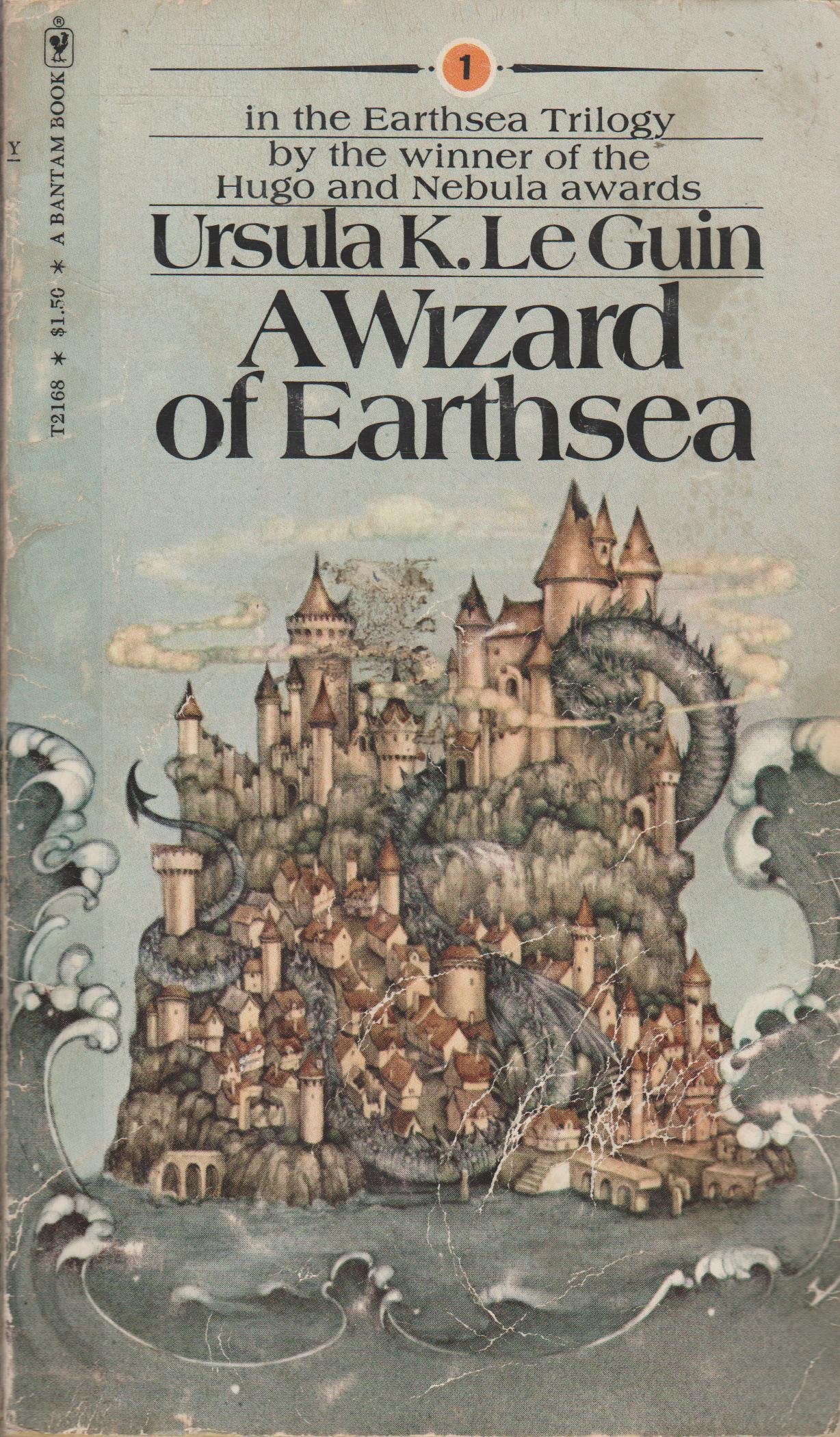
Just like with How Europe Underdeveloped Africa, this is only the second work by this author that I've read! (As an aside, the first was Rocannon's World). I gotta say, just as with Elric of Melnibone, I am absolutely ashamed that it took me this long to get around to actually reading this novel. It is an absolute masterwork, a story that illustrates a fascinating world with beautiful cultural detail, and a story that operates on an even more folkloric logic and Vibe than Elric does. The story just flows so beautifully and so naturally, it ended up feeling like there wasn't even a three act type of structure and more like Le Guin was just describing events as they happened, but rather obviously there was a pretty traditional narrative it just wasn't as clean as I think a lot of mainstream fantasy is these days. I love the world of Earthsea, and I desperately want to read more in that world, arguably way more than I do more of the Elric stories. Le Guin is the kind of author that I am always trying to emulate in my own creative work, and A Wizard of Earthsea is a great example of that. Its hard for me to be specific mostly because I actually read most of this book in one sitting months ago and while the narrative has stuck with me in my memory its all one cohesive experience and yknow, that's not something that happens a whole lot with novels. Of the novels I review here, this is the one I recommend the most.


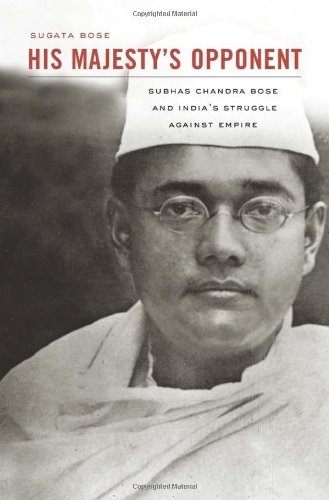
His Majesty's Opponent: Subhas Chandra Bose and India's Struggle Against Empire by Sugata Bose
The first of two biographies I'll be reviewing here! This is The definitive biography of Subhas Chandra Bose, who was one of the leading figures of the Indian independence struggle back in the early 20th century. Unfortunately, Bose isn't nearly as widely known as Gandhi or even Nehru are, who were Bose's contemporaries and fellow leaders in the Indian National Congress, and yknow that is just a cryin' shame! Bose is a fascinating figure, a great man who had a very introspective and intelligent and philosophical worldview, as well as being the leading representative of the radical and socialist part of the INC. He is controversial in western countries these days because of his involvement with the Axis during WW2, which he defected to because they were fighting the British who occupied and exploited India, but I really think accusations of him being a fascist or of accepting fascism are dishonest and dismissive. For instance, he personally stopped any British Indian POWs from being sent to fight against the Soviet Union and he was for his entire life an opponent of Nazi racism. This book generally does a great job of presenting his complicated and fascinating life in all of its details from his youth to his death, although I think it downplays some aspects of his political career and thought that were influenced by Marxism, mostly because the members of his family are, while still on the leftist side of things, much more moderate than the man himself was. Would recommend to anyone interested in Indian history or politics, or to anyone who considers themselves a socialist!


Eurocentrism by Samir Amin
Samir Amin is a well-known Egyptian-French Marxist theorist, and this is his most famous work by far, another work of political economy like Rodney's How Europe Underdeveloped Africa. I gotta say, I think Amin is just as good of a writer as Rodney is, reading this book was an absolute delight, very intelligent and rigorous but not at all difficult to read. Literally why don't more academics write as clearly as Rodney and Amin??? Eurocentrism is his work on the social, economic, and political relationship between Europe and the Middle East, though a lot of his ideas can be easily applied to other places where Euro-American countries have colonized or conquered. It isn't really the most important part of the book, but I personally really liked the part where he addresses the idea that the Christian religion is one of the causes of European economic dominance (which was advocated by the sociologist Max Weber way back when), but that might just be me as a religious studies nerd honestly. Oh, also I read another book with a similar title this past summer, the much more famous Orientalism by Edward Said, and I gotta say I like Eurocentrism way more. Not only do I think Amin's conclusions are better than Said's, it's also just unequivocally written better and more clearly.


Women and Gender in Islam: Historical Roots of a Modern Debate by Leila Ahmed
A great book on a really important topic, I read this at the same time as Amin's Eurocentrism and they kinda complemented each other, though Ahmed obviously is more focused on one aspect of society and takes a more broader historical framework than Amin does, beginning with gender roles in ancient Mesopotamia and ancient Egypt. The chapters on gender roles in Hellenistic Egypt at the beginning were super interesting, and the stuff on the role of women in the national movements of the 19th and early 20th centuries were super cool too. Ahmed's emphasis on using historical methods to place the debate internal to Islam over the role of women in a historical context is really good, and in my opinion really important when the predominate perspective in such discussions is a transhistorical western liberal feminism. Honestly, not much I can say other than that this is a well written book and the go-to work on the topic, and one that I would wholeheartedly recommend. The author is a Muslim woman who is very interested in the topic of Muslim women living and working within Muslim society rather than the generally anti-Muslim framework of western feminism and its great.

This isn't the edition I read but the edition I read had a boring cover

The Civil War in France by Karl Marx
Yeah yeah I read communist theory books for fun so sue me. I had actually been meaning to read The Civil War in France for a while, and what ultimately prompted me to finally read it was attending a lecture about it by one of the English professors at my school actually, it was a great lecture for the most part. Not reviewing that lecture though, I'm here to review the book! The Civil War in France is a collection of three addresses that Marx gave to the International Workingmen's Association during and in the immediate aftermath of the uprising of the Paris Commune in 1871; it is also the only work by Marx that was originally published in English and it shows! This is definitely Marx's writing at its best, absolutely beautiful prose and impactful writing that flows so smoothly and powerfully when you're reading it. I read the entire thing, from start to finish, in one sitting! This isn't really a history of the Paris Commune of 1871; as would be expected of something written during the events it is describing, it isn't exactly accurate on all the details, but in a sense what matters more than being exact on all of the details is the real meaning of the work. It is an ode to revolution and a description of the possible steps that can be taken to reach a world beyond repressive capitalism. The Civil War in France is one of Marx's best works, and it isn't a major investment to read; read it today! Or well, whenever you're able to, I just think you oughta read it.

The Age of Revolution by Eric J. Hobsbawm
This is the first book in Hobsbawm's Ages trilogy that describes the "long nineteenth century" from 1789 to 1914, which I picked up from my university library when I suddenly had a fit of desire to read stuff about the 19th century (which is also when I picked up The Civil War in France actually). This is a very well written history, and one that takes a fantastic bird's eye view of events rather than being caught up in nitty gritty details. The descriptions of the lives of revolutionary conspiracies ranging from France to Italy and Germany was great, the descriptions of the changes in lives of peasants and other lower class people in Europe were great, generally this book made me actually get interested in a time period that I hadn't paid much attention to before (and a period which you may notice in the following books). I haven't read Hobsbawm's other Age of books yet, but I gotta say that if you are someone interested in history and especially European history, you should read this book.

This isn't the edition I read but I like this one's cover more

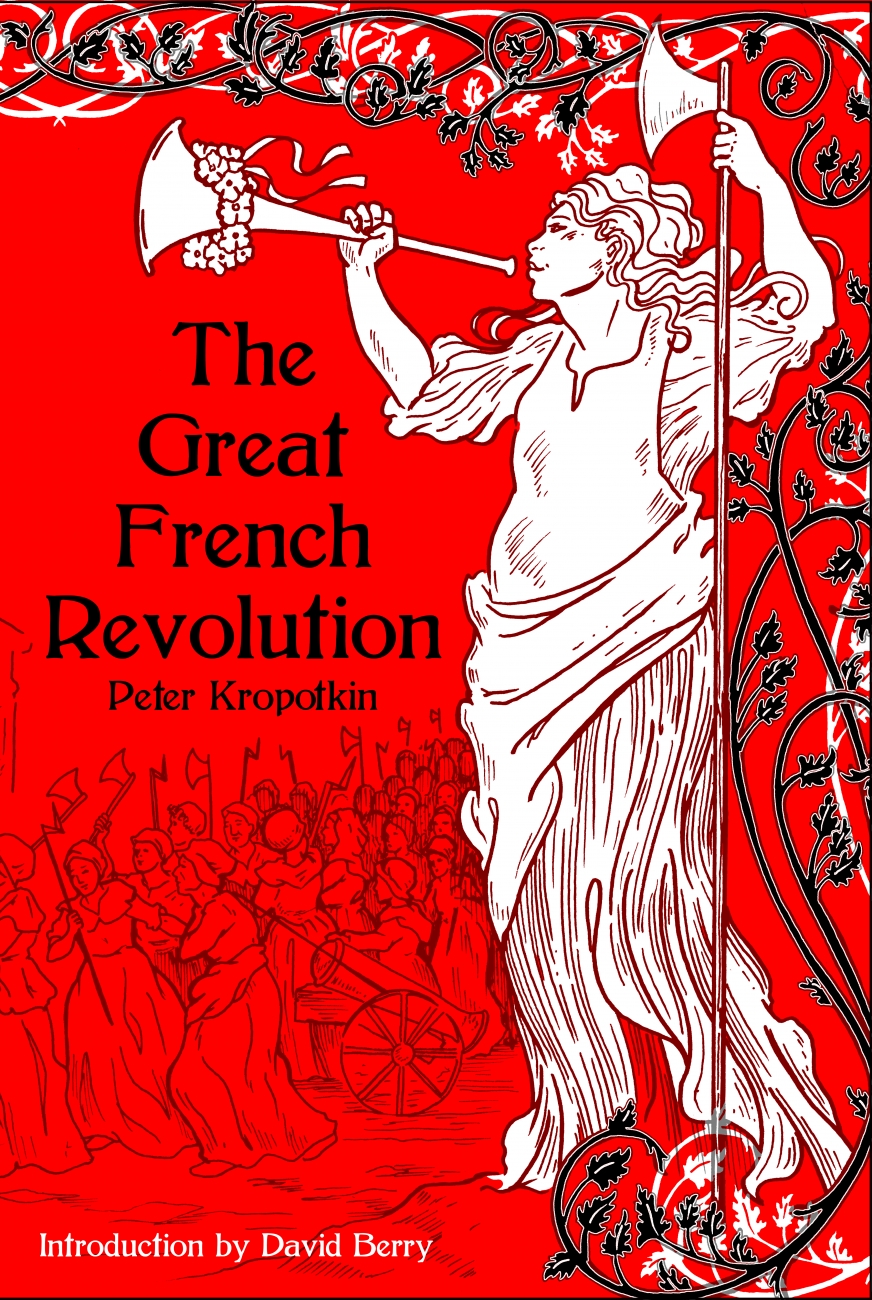
The Great French Revolution by Pyotr Kropotkin
My fit of desire to read up on the 19th century rapidly morphed into an interest in the French Revolution, which is a historical event that I had absorbed info about from general cultural osmosis and from history classes but which I hadn't actually dedicated much time to reading about. And I gotta say, the period of time around the French Revolution now grips me! Kropotkin's Great French Revolution should be the go-to classical work on the French Rev, it is masterfully written and enjoyable to read if perhaps brimming with numerous French names and a bit long. It is definitely a very 19th century-early 20th century work, but honestly that's another reason to read it, in a lot of ways people don't write stuff as good these days, generally speaking. I don't get why Edmund Burke's conservative history of the French Revolution continues to be the main traditional account in the English-speaking world forreal. Also, Kropotkin's work is the first major attempt at centering the lower classes in the French Revolution, and this work was one of Vladimir Lenin's favorite books; when I read it I definitely understood why!


The Black Jacobins: Toussaint L'Ouverture and the San Domingo Revolution by C.L.R. James
A classic and a deserving one! Unlike my disagreement with how Burke predominates in the accounts of the French Revolution, James very much deserves to have his Black Jacobins be the go-to classic account of the Haitian Revolution. This work covers the French and Haitian Revolutions in fantastic detail and narrative style, written smoothly and easily to read, and explaining the social conditions of the time in Haiti in such a way so as to communicate both the literal detail and get across the terrible atmosphere that loomed over the island when it and its people were enslaved by the French. Everybody should read this book, everybody should read James in general really, and more than that everybody ought to learn about the struggle to establish the first Black republic in the world. Toussaint L'Ouverture is one of the great figures of history, and yet James maintains the materialist perspective of history, recognizing L'Ouverture's great aspects but only in the material context within which he grew up and lived.


Gracchus Babeuf: The First Revolutionary Communist by R.B. Rose
Gracchus Babeuf is one of the most interesting figures of the French Revolution, one who doesn't receive nearly as much attention as he ought to. He was at the center of a conspiracy to overthrow the Directorate in the years after the Thermidorian Reaction that overthrew Robespierre, and more than that he was one of the earliest modern conceptualizers of communism, that being the society where all things are held in common, and of strategies for how to get there. R.B. Rose's biography is the go-to work on Babeuf, and places itself in relation to other scholarly works on the figure, explaining the disagreements in such a way so as to understand them without having to have read the other works (many of which aren't in English). Babeuf developed an idea of economic planning that is more reminiscent of the socialists of the 19th century than his own contemporaries, and his strategy to reach that society was founded on a deep faith in the power of democracy, albeit requiring a conspiratorial dictatorship to overthrow the Directorate first, with the democratic republic established after leading to communism because the majority of the people in France would progressively vote for it. If you're at all interested in the French Revolution, the history of socialism/communism, or in political conspiracies, check out this book!

Consider Phlebas by Iain M. Banks
The last book I read in 2021, technically it's also the first book I read in 2022! While I read the majority of it before midnight January 1st, it wasn't until the start of the new year that I was actually able to finish it. This is a great work of science fiction, one which I picked up after more than a year of recommendations to read Banks's Culture novels. Consider Phlebas is the first science fiction novel that Banks wrote, but I don't think you would be able to tell that just from reading it; the book is very well written, reading it is an absolute breeze, and it has so much worldbuilding just out of view or beneath the events being described. It felt almost like this was the culmination of quite a while of writing in this setting, but it is the first book set in the universe of the Culture! I would definitely recommend if you like fun and unique science fiction worlds and exhilarating space-type adventures. The one thing I will note though is that this book can get very casually violent and gory at times, so be prepared for that! It isn't over the top necessarily, but there is quite a lot of death and misfortune contained herein. I like that in the story, but other people might not, so yknow.

And that's it, those're my 12 most favoritest books that I read last year! I think you can probably discern my patterns of interest, or at least some of them. Thank you for reading, and I look forward to another year of reading great books, and to returning to posting TTRPG content shortly!