Showing posts with label books. Show all posts

Wednesday, June 24, 2026

A Real 17th-Century Dungeon Delve

Earlier this year, I read An Ottoman Traveller: Selections from the Book of Travels by Evliya Çelebi, in part following a very exciting and happy trip to Istanbul in December/early January. Evliya Çelebi was a seventeenth-century Ottoman nobleman, muezzin, Qur'an reciter, and possible Sufi initiate who embarked on a life-long endeavor of travel following a dream wherein the prophet Muhammad, the Rightly Guided Caliphs, and the muezzin Bilal vouchsafed him and gave him the mission of travel. It's a really great book, a super fun read that puts into English translation most of the majorly important, interesting, and sometimes shockingly humorous scenes from Evliya Çelebi's travels (it doesn't feature all of his Seyahatname, which has never been fully translated into English). While there are more tidbits which I think are worth sharing, I wanted to highlight a specific episode which was so surprisingly relevant to this blog and to OSR, location-based adventure design... Evliya's description of what amounts to a real dungeon delve from the seventeenth-century Ottoman Empire!

I finished the book months ago and have been sitting on a draft of this post for a full month, if that tells you where I've been at any. Procrastination central over here.

1839 painting by Francis Arundale

Anyway! I'm not going to quote the entire section in full, because its actually quite long. The dungeon in question are the ancient depths of the pyramids of Giza, which have fascinated people with their age, grandeur, and mystery for just about as long as they've existed. If you're curious as to what medieval Muslims before Evliya's time thought about the ancient Egyptian pyramids, check out this very informative video on the topic from the Islamic history channel al Muqaddimah (while you're there, also check out this video on how the Mongol khans became Muslim sultans, which I wrote most of the script for!). Evliya calls the pyramids of Giza "three mountains," lauding them as the man-made versions of Mount Qaf, the mythical cosmological mountain so large it encircles the world, and even gives names to each of these mountains (these are Mt. Balbahith (aka Belhib), Mt. Malhawiya (aka Belhube), and Mt. Abu'l-hawl (which actually refers to the Sphinx)). He also goes over the many conflicting accounts for why the pyramids were created, which (at least in this translation) reads very much like the kind of fantastical yet purposefully uncertain worldbuilding that is widespread in these circles:

There are thousands of stories about these artificial mountains. Some chroniclers say they were built before the Flood by Ad ibn Shaddad. Others maintain that before the flood, King Surid, at the urging of his soothsayers, built them as a tomb for himself. When they were finished he filled the three pyramids with treasure, put in weapons, and also placed therein the books of all the sciences written by the prophet Idris. He set up talismans and guardians (?) and covered the pyramids with brocade, making them a hidden treasure. He also built a great city on the shores of the Nile where the guards of the pyramid resided. Every year, in spring, all the people of the world came and circumambulated the pyramids, as they do the Ka'ba.

Even now, in the northern pyramid, there is a south-facing gate, inside of which, on the right side, is a Hebrew inscription carved on the rocks. It reads, "I who built the pyramids completed them in six years. May those who come after me be able to tear them down from their foundations in 600 years. Indeed, it is easier to tear down than to build up. And I covered them with brocade. May the kings who come after me be able to cover with them reed mats."

Further, Evliya recounts a tale of the Caliph Ma'mun, who came from Baghdad to Giza to uncover the treasures of the pyramids, and whose efforts to do so proved the above inscription, because after spending seven months just to excavate 20 cubits from the pyramid, his workers only uncovered a jar containing enough gold pieces to exactly cover the exorbitant costs of the excavation thus far and nothing else. But, lest he let his own ego be overcome by this, he boasts his plan to overcome the ancient mountains:

As for the saying of Surid - "I built the pyramids in six years. May the kings who come after me be able to tear them down in 600 years" - the interpretation of this humble one is: If I were to mine the pyramids with 100 quintals of black powder and one 'six-treasure' mine that was used in the siege of Candia castle, the mountains of Ahram (the pyramids) would be blown sky-high like an ihram (pilgrim's garment) and no trace would be left of the building, not even the foundation, but all would crumble to the ground and melt into the Nile.

But, to tell the truth, I have never seen such a huge building on the face of the earth...

Inside the great pyramid of Khufu

And now, the dungeon delve proper: 

God be praised that, during the governorship of Ibrahim Pasha, I spent five or ten days partying next to the pyramids, while our horses were grazing in the nearby meadow, and I had occasion to tour them several times and marvel at them.

On one occasion there were forty-five of us, including some in the retinue of the Master of the Horse and Behlul Agha and other officers. We brought torches, oilcloth lanterns and wind-tapers. After clearing away the sand and rubbish from the door on the northern side of the large pyramid, we took refuge in God and entered with a besmele. This humble one kept an eye on the compass and the watch.

The first 700 paces in a southern direction was a broad highway, fifteen cubits wide and surmounted by vaults 20 cubits high. There were numerous caves on either side, also man-made halls with domes carved from the soft rock stratum and gilded and decorated as though just emerged from the hand of Bihzad. Every cell was full of human bones, and every skull could hold 100 bushels of wheat. Only God knows how many skulls there were, both large and small. In our path lay a shinbone, still covered with its skin, that was 71 spans as measured by this humble one's hand. There were an abundance of such bones.

One large cave was full of human corpses that lay shrouded in date-palm fibres. And there were several hundred skeletons (or mummies), each 70 or 80 paces tall. But we nearly suffocated from the smell of bat droppings, the bats being as large as crows and hanging from the rocks by their claws. Some hurled themselves at the lanterns and torches and scorched their wings. Some struck us in the face.

At this juncture, a few of our companions got frightened and went back with one or two lanterns. The thirty-five of us who were left summoned our  courage and went on for another hour, along a gently descending slope, our compass pointing south. We saw vaulted halls like the Vault of Chosroes, each containing mummified human corpses, and near them, trampled in the dust, rotted reed mats and pieces of cloth woven of date-palm fibre.

Fifty paces further on, continuing on a downward slope, we came upon a large pool of clear water. But all around the edge sat frightful birds, as large as eagles or geese. As soon as they saw us, they flapped their wings and produced a thunderous noise that made our brains ooze from our ears. And the bats besmirched us and our clothes with their droppings. Meanwhile the torchbearers informed us they were running out of kindling. The noise produced by those eagles' wings was particularly dreadful.

We had no heart to advance a single step beyond that pool, and had just decided to turn around when a freezing-cold wind from the direction of the birds made us shudder with apprehension. What would we do if our torches and lanterns went out? The bats meanwhile, that were the size of pigeons, kept fluttering at the flames like moths and brushing against our faces with their wings. It nearly drove us crazy.

To make a long story short, guided by the piles of stones we had set up along the way, we somehow managed to make our way back and emerged safe and sound. Our companions who had fled earlier teased us, saying, "Where did you get these filthy faces and strange looks?" God knows, though we emerged safely, we were completely exhausted. But it was a tremendous experience! Only God knows what lies beyond that pool.

Thus this humble one saw the inside of one of the pyramids. There was no buried treasure, only buried men. But there is no doubt that it is under a talismanic power. For when we came to that pool, all of us were confounded, and we remained in this stunned condition until we came out into the air, when we recovered our souls. God save us! May I never be vouchsafed to enter it again.

After returning to our tents for breakfast and coffee, we surveyed the pyramids from all sides. Two of them have a square base with each side 200 paces long, making the circumference 800 paces. Each of the stones is 20 or 30 cubits. The large pyramid has a door on the northern side through which we entered, but the other two have no visible entrance. The Abu'l-hawl pyramid (the Sphinx) is quite small, but both are mountains with square base and pointed tip reaching up to the sky.

I climbed up the pyramid that we had entered. At the top there isa square or arena large enough to pitch a pup-tent with ten flaps. In some of the crevices I found jesses and hoods and pigeon rings and anklets. All Cairo was spread out beneath my feet - so lofty are these mountains. There are also structures built of black stone and guarded by talismans all around the pyramids. I would need an entire volume to describe them all.

I hope that you may forgive the lengthy quotation! I just loved this whole episode from the moment that I read it. It is so completely unlike what we now know to be inside the pyramids at Giza, to the point that clearly it must be fabricated, but none of the details surrounding the actual expedition into the pyramid appears fantastical or fabricated at all. The talismanic power that surrounds the pyramid fits very well into the aca'ib literature in the Ottoman Empire at the time, the literature of the fantastic and miraculous, more or less the early modern Ottoman equivalent of paranormal literature. But on top of that, the imagery here is just so unsettling! Giant, looming skeletons and desiccated corpses, a pool of dark water thronged by huge uncanny birds (birds explicitly compared with eagles and geese especially, for some reason roosting in this completely closed-in space, just feels so fundamentally wrong). It's just too good!!

Thinking through Evliya's description as an actual dungeon, it reads very much like a classic dungeon where the main concerns are resource depletion brought on by the systemic exploration of large ancient spaces which may have rather monotonous architecture. Not quite a fair comparison, but reminds me some of good ol' megadungeons like what we have of Gary's notes for Castle Greyhawk, or the early OSR favorite Stonehell. None of the giant corpses come to life like something out of Barrowmaze, but they very very effectively set the tone (alongside the giant "vaults of Chosroes" (Khosrau Anushirvan)) for the methodical exploration. This is then capped off with a room that seems to be half "special" (i.e. the mysterious pool with the birds posing a particularly sound-based challenge for Evliya and the other adventurers) and half a monster lair. I love the birds so much dude.

That's all I wanted to make this post for :) It's just a very very cool OSR-y episode from an extensive collection of such evocative anecdotes and descriptions which document a life of travel in the seventeenth century. I would love to run a dungeon with even half the rich oozing darkness of Evliya's description here.

Ottoman miniature of the Seven Sleepers of Ephesus (they slept in a cave which is underground like the pyramid dungeon is, so its thematically appropriate)

Joesky tax for this otherwise non-gameable post:

Frightful Birds of the Pyramid 
Number Encountered: 4d8
Hit Dice: 1+2
Attacks: 1 bite (1d6) + 1 claw (1d6) OR frightful flapping
Armor: as leather
Morale: 8
Bat symbiosis: Frightful birds of the pyramid have a mutualistic relationship with the guano-producing bats which dwell in the pyramid and which have the uncanny ability to crawl through the paper-thin gaps in the masonry. They subsist on the bat's guano, given few other food sources. When frightful birds of the pyramid are engaged in frightful flapping (see below), they agitate their bat partners and prompt them to release guano on the birds' interlopers, which applies an additional -1 to the save vs. noise required as well as having a chance to spread disease.
Frightful flapping: When there are six or more frightful birds of the pyramid in close proximity, they may produce a frightful flapping which overwhelms the senses and disempowers those who hear it. Those within earshot must save vs. noise or be overcome with a terrible sense of impending doom and anxiety that prompts them to flee. This save has a penalty of -1 for every 6 frightful birds which are present.

Appearing like great looming shaggy geese, pallid and sickly with uncannily wide and arm-like wingspans and feathers choked with occasional spats of grey, the frightful birds of the pyramid were trapped within this ancient structure long ago, when it was first closed up. This is typically attributed to the long forgotten god of knowledge and writing having decided to do so on a whim. Now, the things are adapted to the darkness within the great pyramids. They subsist on bat guano and linger around deep dark pools of stagnant water. When threatened, they use their numbers to their advantage, flapping violently to produce a horrible echoing noise; when this fails, they attack with their beaks from their long flexible necks and slash with one webbed foot, the other foot comically hopping on the ground like an animal that never properly learned how to walk. They do not guard treasure. "There was no buried treasure, only buried men."

Saturday, January 15, 2022

Book Reviews Nobody Asked For

Hello! Apologies for the slight hiatus; looking back on it its only really been two months or so, it feels like way longer than that. Here's a post that isn't perhaps the most game-able, but is just me sharing things that I like. I've been having a bit of a hard time getting back into the headspace to work on stuff again; been struggling on not just getting back into writing TTRPG stuff but also short-form fiction and a historical article. Hopefully this writer's block will end at some point, I dunno.

Well, here goes: herein I will be reviewing my top eleven books that I read in 2021, in roughly the order that I read them. I'll also be including one novel that I only just finished this month because I like the number 12, but I'll separate that out since technically I didn't just read it in 2021. This year was a year of reading for me! I finished like 21 or 22 (its kinda hard to tell) books in 2021; that's kinda crazy because like, I love reading but a lot of the time I get so busy with other stuff, especially during the school year, that I end up being lucky if I finish like, one or two in a single semester or something like that. Hopefully I'm able to keep this reading momentum up in 2022! And yes I know how nerdy that sounds, and no that nerdiness won't be helped by the books I talk about below.


Elric of Melnibone by Michael Moorcock
I had been meaning to actually get around to Moorcock's stories centering around the albino sorcerer-king Elric, and I am very glad that I did! Took me much too long to do, if I'm being completely honest. I love sword and sorcery fiction, and Elric has very deservedly earned his place among the great iconic characters of that genre alongside the creations of Robert E. Howard and Edgar Rice Burroughs. I think this novel is a good place to start for both Moorcock's writing and for the Elric character in particular; while not the first story written with Elric as the protagonist, the novel is centered on the events that ultimately make Elric into a sword and sorcery hero rather than just a king on a throne. Elric of Melnibone also has an absolutely incredible mythic vibe that oozes out of just every aspect of it, especially the parts dealing with magic and religion. I love when Elric makes a deal with the spirit that lords over the waters to survive drowning, it felt like something out of an actual ancient myth. This novel is full to the brim with adventure and fantasy, and I know that sounds generic but that's because novels like this are the foundation for the genre! The ending is incredible too, I don't want to spoil it too much but Elric ends up having to do some shenanigans that are Odysseus level. Oh yeah this is on an OSR blog, this is a really OSR kind of novel, if you like sword and sorcery you oughta read it if you haven't. I want to read more Elric stories; I've now read some of Moorcock's non-Elric stuff and I can't say I like it as much.


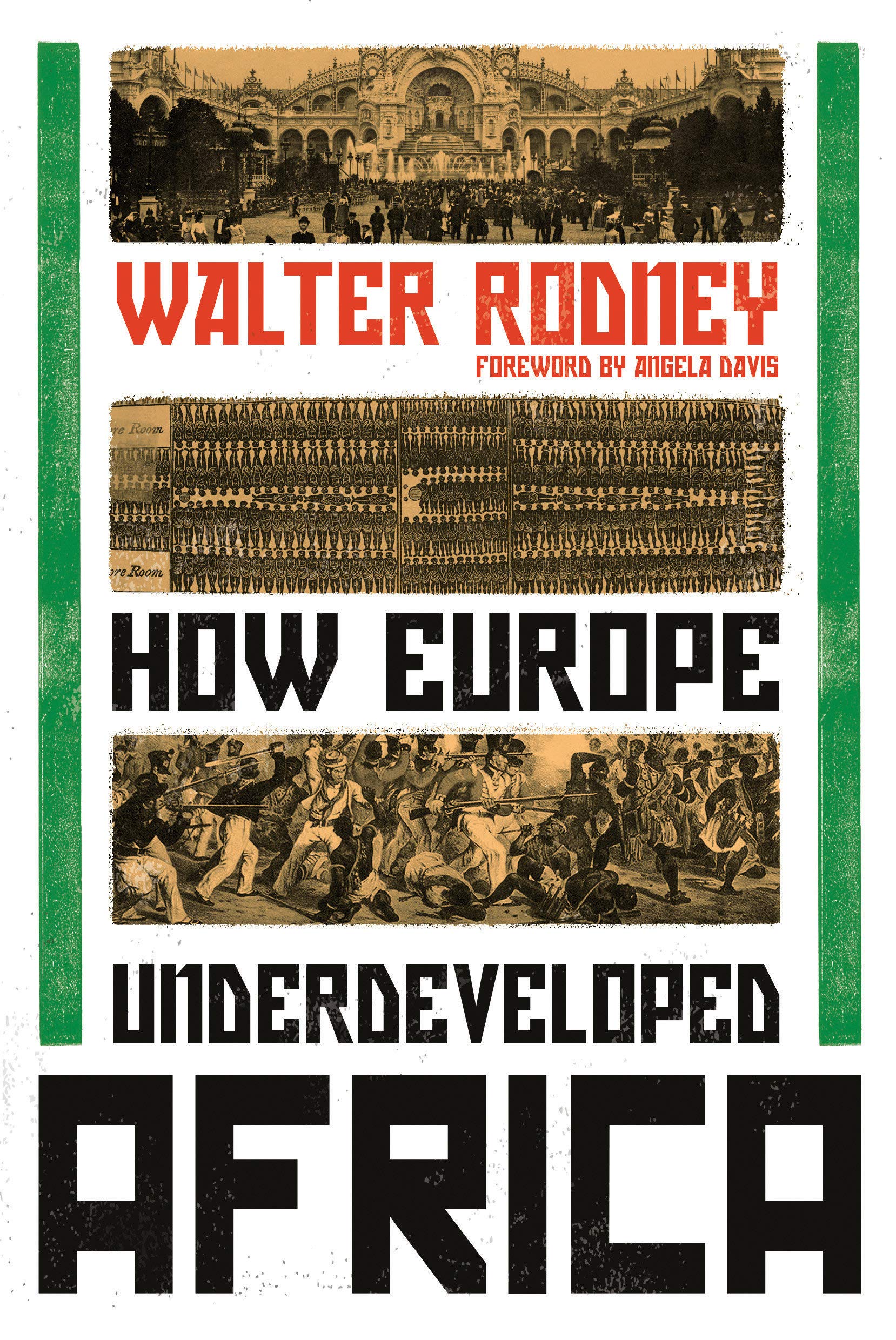
How Europe Underdeveloped Africa by Walter Rodney
Walter Rodney is, in my opinion, one of the best thinkers and writers of the 20th century, and one who was criminally taken from the world much too young. This is his most famous work, and is the second work of his that I've read (the first being The Russian Revolution: A View from the Third World which I also highly recommend). Walter Rodney was a leading voice in the movement for black liberation and socialism, coming from Guyana but having lived and taught extensively in Tanzania, especially at the University of Dar es Salaam that attracted many of the brightest minds and strongest voices of the African diaspora during the 1960s and '70s. How Europe Underdeveloped Africa was his grand work of political economy, endeavoring to describe why African countries are, as a rule, poor and economically underdeveloped; as you can probably tell by the title, the book centers the role of European imperialism which, yknow, is a good thing to center in that narrative. Rather than being a discussion of how African countries were being exploited in his day, it is about how Africa got to the socio-economic place it is in; while he writes from the 1970s, it is still an incredibly valuable work of history and political economy. If you only read one book out of the twelve I review here, make it this one.


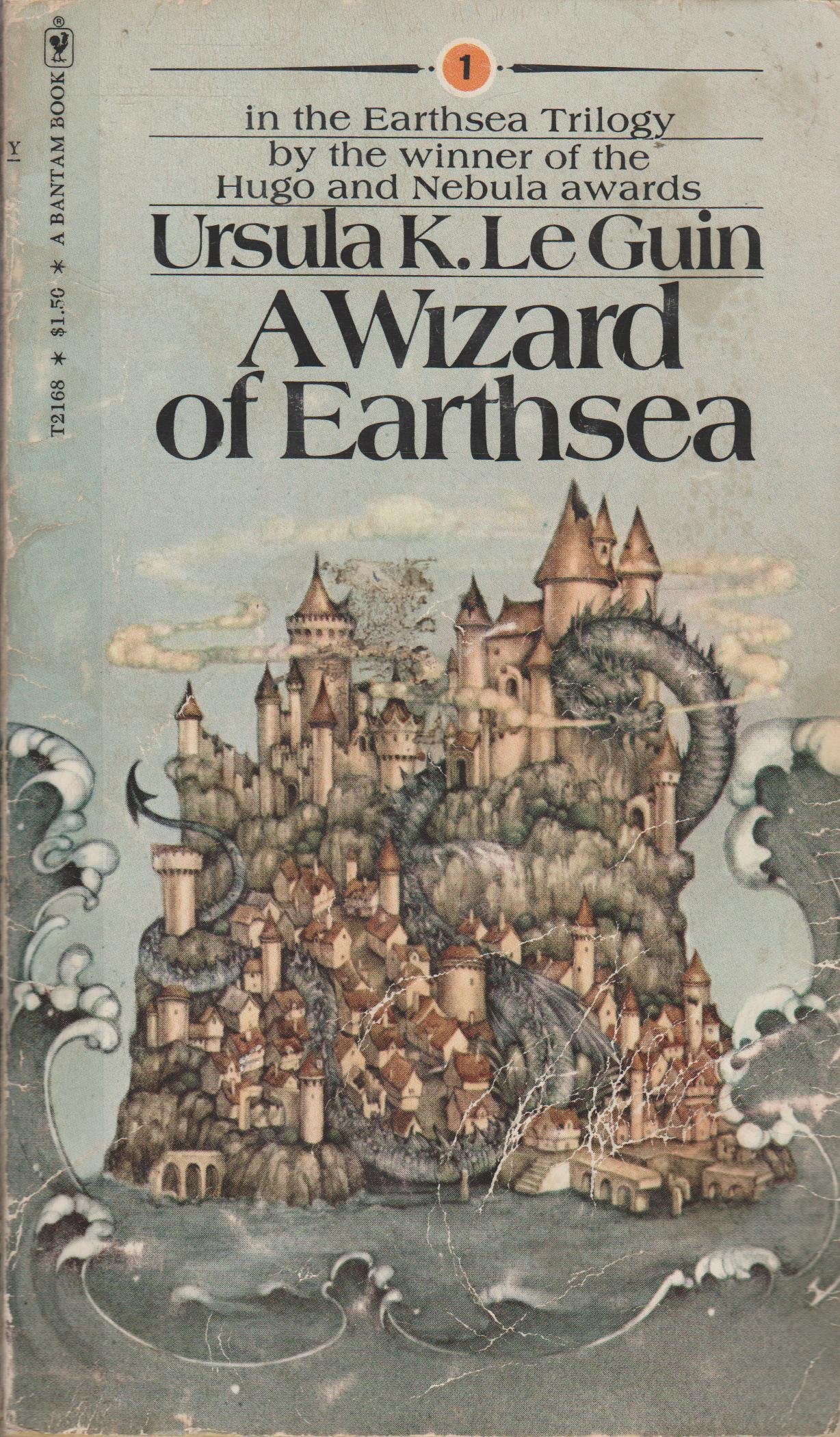
A Wizard of Earthsea by Ursula K. Le Guin
Just like with How Europe Underdeveloped Africa, this is only the second work by this author that I've read! (As an aside, the first was Rocannon's World). I gotta say, just as with Elric of Melnibone, I am absolutely ashamed that it took me this long to get around to actually reading this novel. It is an absolute masterwork, a story that illustrates a fascinating world with beautiful cultural detail, and a story that operates on an even more folkloric logic and Vibe than Elric does. The story just flows so beautifully and so naturally, it ended up feeling like there wasn't even a three act type of structure and more like Le Guin was just describing events as they happened, but rather obviously there was a pretty traditional narrative it just wasn't as clean as I think a lot of mainstream fantasy is these days. I love the world of Earthsea, and I desperately want to read more in that world, arguably way more than I do more of the Elric stories. Le Guin is the kind of author that I am always trying to emulate in my own creative work, and A Wizard of Earthsea is a great example of that. Its hard for me to be specific mostly because I actually read most of this book in one sitting months ago and while the narrative has stuck with me in my memory its all one cohesive experience and yknow, that's not something that happens a whole lot with novels. Of the novels I review here, this is the one I recommend the most.


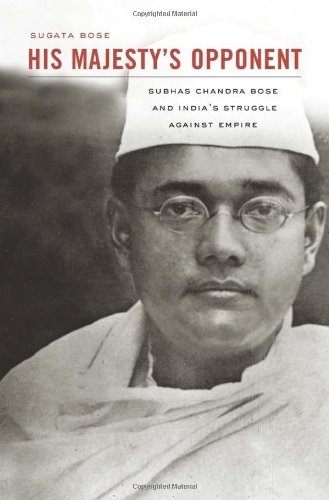
His Majesty's Opponent: Subhas Chandra Bose and India's Struggle Against Empire by Sugata Bose
The first of two biographies I'll be reviewing here! This is The definitive biography of Subhas Chandra Bose, who was one of the leading figures of the Indian independence struggle back in the early 20th century. Unfortunately, Bose isn't nearly as widely known as Gandhi or even Nehru are, who were Bose's contemporaries and fellow leaders in the Indian National Congress, and yknow that is just a cryin' shame! Bose is a fascinating figure, a great man who had a very introspective and intelligent and philosophical worldview, as well as being the leading representative of the radical and socialist part of the INC. He is controversial in western countries these days because of his involvement with the Axis during WW2, which he defected to because they were fighting the British who occupied and exploited India, but I really think accusations of him being a fascist or of accepting fascism are dishonest and dismissive. For instance, he personally stopped any British Indian POWs from being sent to fight against the Soviet Union and he was for his entire life an opponent of Nazi racism. This book generally does a great job of presenting his complicated and fascinating life in all of its details from his youth to his death, although I think it downplays some aspects of his political career and thought that were influenced by Marxism, mostly because the members of his family are, while still on the leftist side of things, much more moderate than the man himself was. Would recommend to anyone interested in Indian history or politics, or to anyone who considers themselves a socialist!


Eurocentrism by Samir Amin
Samir Amin is a well-known Egyptian-French Marxist theorist, and this is his most famous work by far, another work of political economy like Rodney's How Europe Underdeveloped Africa. I gotta say, I think Amin is just as good of a writer as Rodney is, reading this book was an absolute delight, very intelligent and rigorous but not at all difficult to read. Literally why don't more academics write as clearly as Rodney and Amin??? Eurocentrism is his work on the social, economic, and political relationship between Europe and the Middle East, though a lot of his ideas can be easily applied to other places where Euro-American countries have colonized or conquered. It isn't really the most important part of the book, but I personally really liked the part where he addresses the idea that the Christian religion is one of the causes of European economic dominance (which was advocated by the sociologist Max Weber way back when), but that might just be me as a religious studies nerd honestly. Oh, also I read another book with a similar title this past summer, the much more famous Orientalism by Edward Said, and I gotta say I like Eurocentrism way more. Not only do I think Amin's conclusions are better than Said's, it's also just unequivocally written better and more clearly.


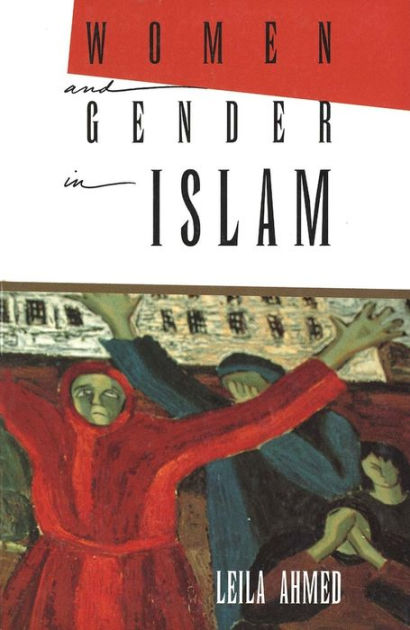
Women and Gender in Islam: Historical Roots of a Modern Debate by Leila Ahmed
A great book on a really important topic, I read this at the same time as Amin's Eurocentrism and they kinda complemented each other, though Ahmed obviously is more focused on one aspect of society and takes a more broader historical framework than Amin does, beginning with gender roles in ancient Mesopotamia and ancient Egypt. The chapters on gender roles in Hellenistic Egypt at the beginning were super interesting, and the stuff on the role of women in the national movements of the 19th and early 20th centuries were super cool too. Ahmed's emphasis on using historical methods to place the debate internal to Islam over the role of women in a historical context is really good, and in my opinion really important when the predominate perspective in such discussions is a transhistorical western liberal feminism. Honestly, not much I can say other than that this is a well written book and the go-to work on the topic, and one that I would wholeheartedly recommend. The author is a Muslim woman who is very interested in the topic of Muslim women living and working within Muslim society rather than the generally anti-Muslim framework of western feminism and its great.

This isn't the edition I read but the edition I read had a boring cover

The Civil War in France by Karl Marx
Yeah yeah I read communist theory books for fun so sue me. I had actually been meaning to read The Civil War in France for a while, and what ultimately prompted me to finally read it was attending a lecture about it by one of the English professors at my school actually, it was a great lecture for the most part. Not reviewing that lecture though, I'm here to review the book! The Civil War in France is a collection of three addresses that Marx gave to the International Workingmen's Association during and in the immediate aftermath of the uprising of the Paris Commune in 1871; it is also the only work by Marx that was originally published in English and it shows! This is definitely Marx's writing at its best, absolutely beautiful prose and impactful writing that flows so smoothly and powerfully when you're reading it. I read the entire thing, from start to finish, in one sitting! This isn't really a history of the Paris Commune of 1871; as would be expected of something written during the events it is describing, it isn't exactly accurate on all the details, but in a sense what matters more than being exact on all of the details is the real meaning of the work. It is an ode to revolution and a description of the possible steps that can be taken to reach a world beyond repressive capitalism. The Civil War in France is one of Marx's best works, and it isn't a major investment to read; read it today! Or well, whenever you're able to, I just think you oughta read it.


The Age of Revolution by Eric J. Hobsbawm
This is the first book in Hobsbawm's Ages trilogy that describes the "long nineteenth century" from 1789 to 1914, which I picked up from my university library when I suddenly had a fit of desire to read stuff about the 19th century (which is also when I picked up The Civil War in France actually). This is a very well written history, and one that takes a fantastic bird's eye view of events rather than being caught up in nitty gritty details. The descriptions of the lives of revolutionary conspiracies ranging from France to Italy and Germany was great, the descriptions of the changes in lives of peasants and other lower class people in Europe were great, generally this book made me actually get interested in a time period that I hadn't paid much attention to before (and a period which you may notice in the following books). I haven't read Hobsbawm's other Age of books yet, but I gotta say that if you are someone interested in history and especially European history, you should read this book.

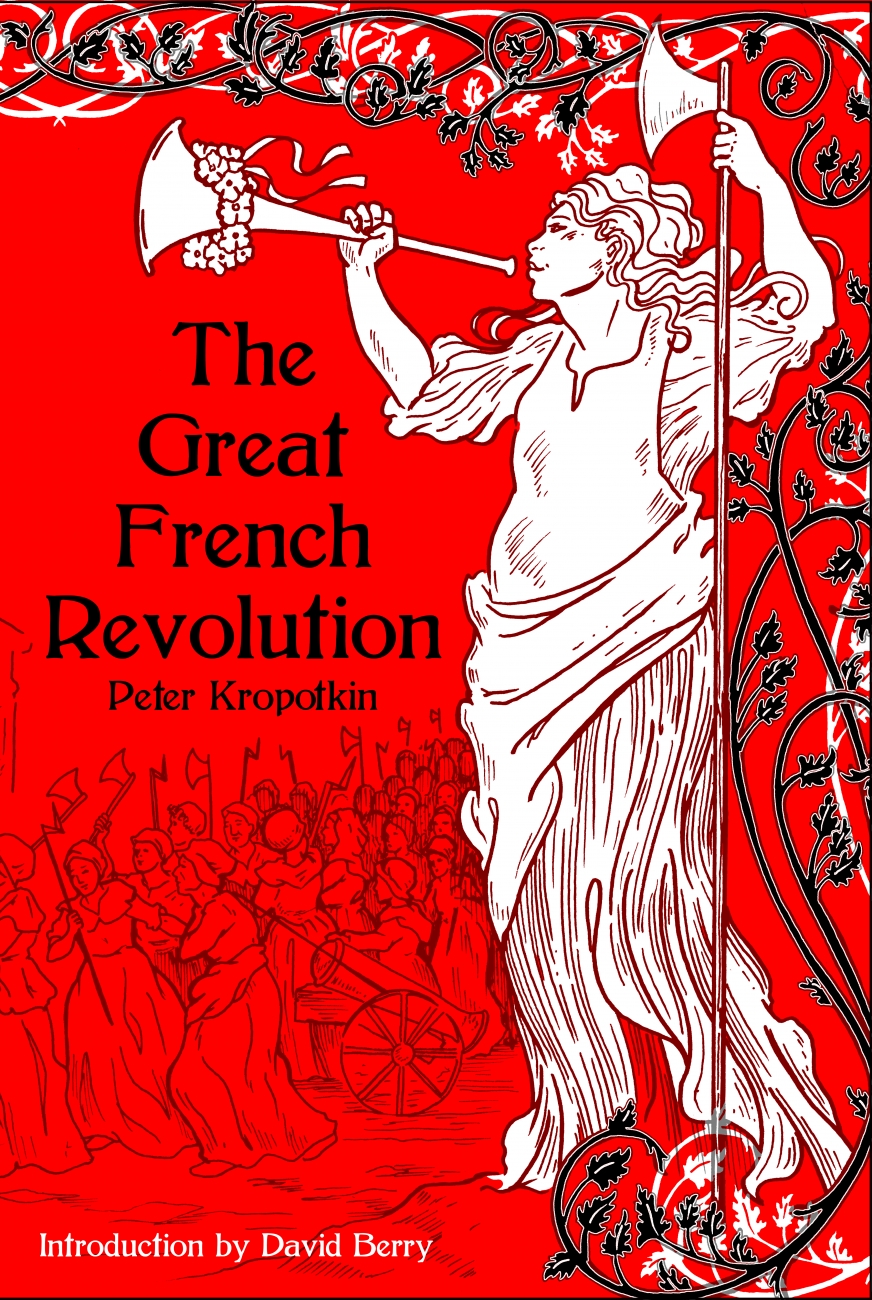
This isn't the edition I read but I like this one's cover more

The Great French Revolution by Pyotr Kropotkin
My fit of desire to read up on the 19th century rapidly morphed into an interest in the French Revolution, which is a historical event that I had absorbed info about from general cultural osmosis and from history classes but which I hadn't actually dedicated much time to reading about. And I gotta say, the period of time around the French Revolution now grips me! Kropotkin's Great French Revolution should be the go-to classical work on the French Rev, it is masterfully written and enjoyable to read if perhaps brimming with numerous French names and a bit long. It is definitely a very 19th century-early 20th century work, but honestly that's another reason to read it, in a lot of ways people don't write stuff as good these days, generally speaking. I don't get why Edmund Burke's conservative history of the French Revolution continues to be the main traditional account in the English-speaking world forreal. Also, Kropotkin's work is the first major attempt at centering the lower classes in the French Revolution, and this work was one of Vladimir Lenin's favorite books; when I read it I definitely understood why!


The Black Jacobins: Toussaint L'Ouverture and the San Domingo Revolution by C.L.R. James
A classic and a deserving one! Unlike my disagreement with how Burke predominates in the accounts of the French Revolution, James very much deserves to have his Black Jacobins be the go-to classic account of the Haitian Revolution. This work covers the French and Haitian Revolutions in fantastic detail and narrative style, written smoothly and easily to read, and explaining the social conditions of the time in Haiti in such a way so as to communicate both the literal detail and get across the terrible atmosphere that loomed over the island when it and its people were enslaved by the French. Everybody should read this book, everybody should read James in general really, and more than that everybody ought to learn about the struggle to establish the first Black republic in the world. Toussaint L'Ouverture is one of the great figures of history, and yet James maintains the materialist perspective of history, recognizing L'Ouverture's great aspects but only in the material context within which he grew up and lived.


Gracchus Babeuf: The First Revolutionary Communist by R.B. Rose
Gracchus Babeuf is one of the most interesting figures of the French Revolution, one who doesn't receive nearly as much attention as he ought to. He was at the center of a conspiracy to overthrow the Directorate in the years after the Thermidorian Reaction that overthrew Robespierre, and more than that he was one of the earliest modern conceptualizers of communism, that being the society where all things are held in common, and of strategies for how to get there. R.B. Rose's biography is the go-to work on Babeuf, and places itself in relation to other scholarly works on the figure, explaining the disagreements in such a way so as to understand them without having to have read the other works (many of which aren't in English). Babeuf developed an idea of economic planning that is more reminiscent of the socialists of the 19th century than his own contemporaries, and his strategy to reach that society was founded on a deep faith in the power of democracy, albeit requiring a conspiratorial dictatorship to overthrow the Directorate first, with the democratic republic established after leading to communism because the majority of the people in France would progressively vote for it. If you're at all interested in the French Revolution, the history of socialism/communism, or in political conspiracies, check out this book!


Consider Phlebas by Iain M. Banks
The last book I read in 2021, technically it's also the first book I read in 2022! While I read the majority of it before midnight January 1st, it wasn't until the start of the new year that I was actually able to finish it. This is a great work of science fiction, one which I picked up after more than a year of recommendations to read Banks's Culture novels. Consider Phlebas is the first science fiction novel that Banks wrote, but I don't think you would be able to tell that just from reading it; the book is very well written, reading it is an absolute breeze, and it has so much worldbuilding just out of view or beneath the events being described. It felt almost like this was the culmination of quite a while of writing in this setting, but it is the first book set in the universe of the Culture! I would definitely recommend if you like fun and unique science fiction worlds and exhilarating space-type adventures. The one thing I will note though is that this book can get very casually violent and gory at times, so be prepared for that! It isn't over the top necessarily, but there is quite a lot of death and misfortune contained herein. I like that in the story, but other people might not, so yknow.

And that's it, those're my 12 most favoritest books that I read last year! I think you can probably discern my patterns of interest, or at least some of them. Thank you for reading, and I look forward to another year of reading great books, and to returning to posting TTRPG content shortly!